
Book Review: Razed by TV Sets by Jason McCall
Razed by TV Sets
By Jason McCall
Autofocus Books
ISBN 978-1-957392-28-8
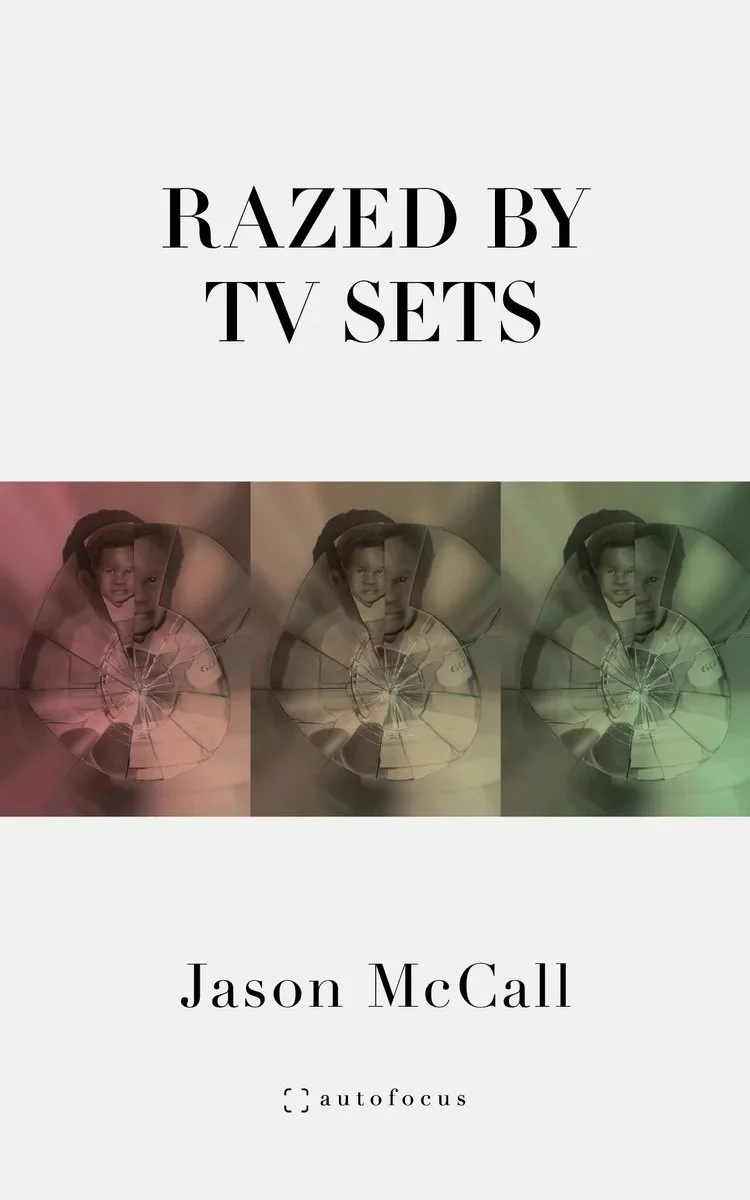
Aside from the beautiful essays 824 Words and My Dad Still Watches the NFL, both previously published by tUR, I didn’t have a formal relationship with Jason McCall’s work prior to reading Razed by TV Sets. Hopping into this collection of essays over the holidays felt nostalgic in a way that holidays always do, but also in a way that a tertiary needle’s slightest touch on a particular meridian can release a flood of tears: unlocked memory, unnamed pain, unrecognized joy. The stories and connections are singularly McCall’s, but the presentation, the boxing of “the set” is universally understood and felt.
The entry point of these essays is akin to the TV set and viewing habits of a certain generation’s youth. How indeed, we were all raised by TV and the cult of personality around the box itself. As readers, it feels like we are watching this boy, then a young man, then his family, in television shows and made-for-tv movies. Sometimes it is a filmy, earth-toned sit-com of my earliest TV memories. Change the channel. It is the chroma, stilted animation of a Saturday morning. Change the channel. It is PBS black and white footage, or slow panning over still images of Mongomery’s past. Change the channel. It is the stretched out basketball court on a horizontal ESPN wide angle. Change the channel. It is high school friends, pizza in a basement, Yo! MTV Raps in the back. Change the channel. It is the primetime hospital drama, with indelible characters (the actors who play them with Emmys and later Oscars) and storylines that seep into the reality of the next morning.
The magic of Razed by TV Sets is this familiar recollection of attention. Before highlight reels and reruns, thirty second limits on “stories”, and the limitation of the music we use in them, we read whole books with our eyes, tuned into full games we watched live, new episodes were unveiled once a week, and full albums were purchased with babysitting cash or tips from wiping down tables. We consumed whole things. Thought about them for a week, talked about them with our friends, dreamed of the next thing to come, studied the art behind it all. We wanted to be whole things that demanded and deserved this kind of collective attention. Each essay here is a call for that kind of thoughtful vigilance again.
Now, forty years removed from the kind of consumption I had as a preteen, my collective stare has narrowed, sharpened to focus on the tinier screen in my pocket, its content aggregated, quick, and relentless. A barrage of images with inferred narrative, just enough happening “off screen” that I am allowed (encouraged?) to create my own uninformed reality. What raised me has now razed me: eyes wrecked, attention destroyed, intention hard to come by, waiting for someone to tell me what I should want.
And so, to reenter this book, in a time when my tiny screen, and my living reality, features my city under federal occupation, the cold work of resistance, and the acute exhaustion of grief, has been both disorienting and oddly familiar. Like I’ve stumbled upon a little 13” tube television in a pile of rubble that mysteriously receives signals from our past. Or a working VHS player and a box of old cassettes. Razed by TV Sets is a relic of humanness: gauzy, saturated episodes, accompanied by the warm, forgiving sound of old wired speakers. McCall’s essays act as portals to not only his own core memories but to our collective past, to a time of more consideration, less dialogue, more exposition, less commercial enterprise, more nuance. From here we can see our future bound to repeat itself and that connection, to each other, our kin, and our community beyond the screen as our only way off that inevitable path.
